

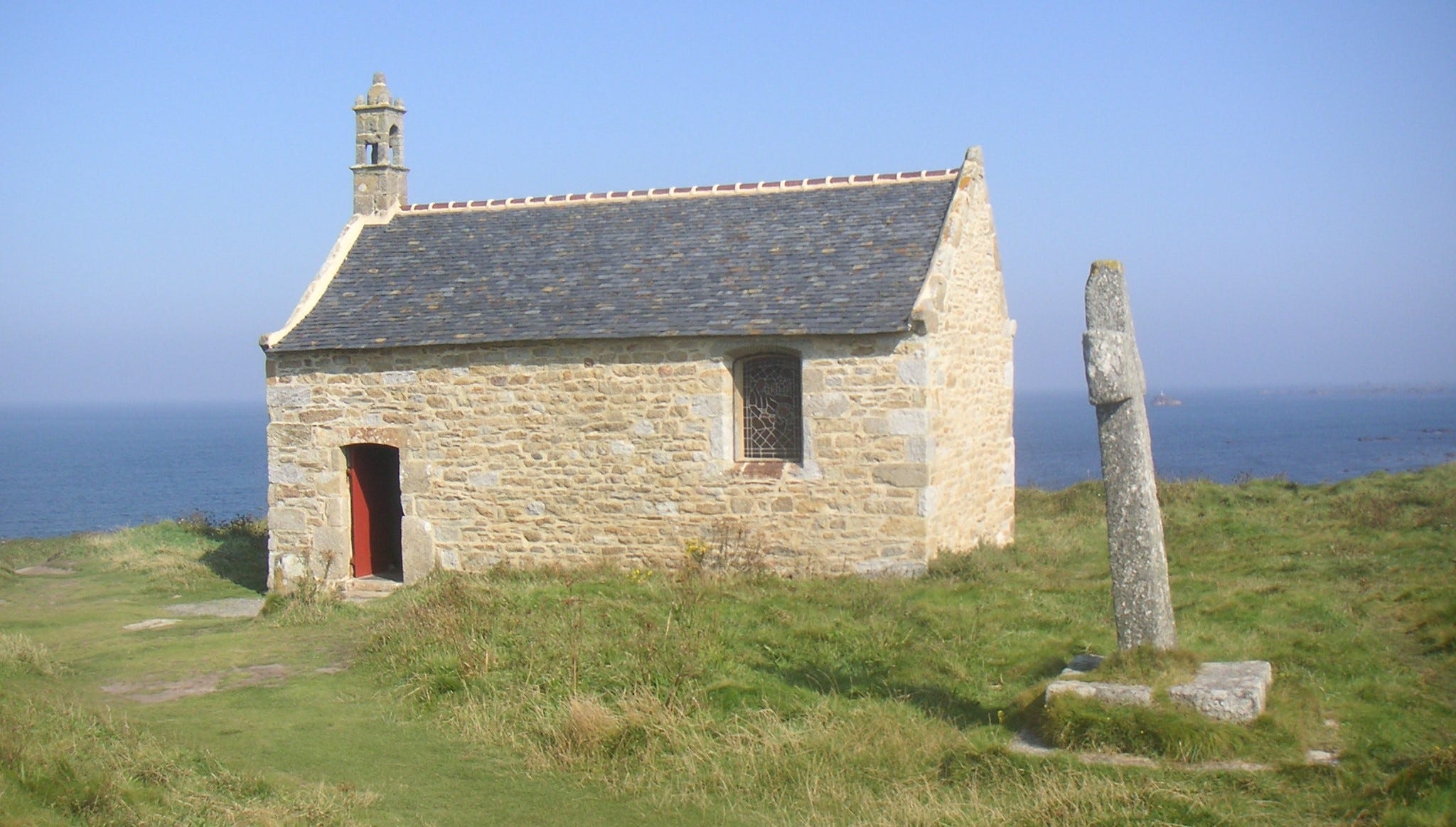
Eternity. Near the stone citadel of the rocks of Landunvez stands the tiny chapel of St Samson, announced from the land-side by its simple stone cross. Below on the shore edge is a fontaine and another wonky cross looking out to sea. Face the ocean, turn away from the modern houses across the coast road and this place feels remote. Beyond an off-shore rocky fringe that was once land itself there is nothing directly westward. No island, no landfall. Nothing before what was once called the New World more than five thousand kilometres away. Only an enormity of water.
Unseen further north is that part of the old world from which the Breton saints emerged. St Samson, from the abbey of Llanwit Major in Wales, is perhaps the greatest of them all, if only because he actually existed, unlike many of his more nebulous colleagues. He became bishop of Dol-de-Bretagne, held in esteem by the Emperor of the Franks and present at important gatherings of the Roman church. His name is on a document from the Council of Paris c555, ten years before his death.
Samson did not arrive from Great Britain in this lonely spot, but elsewhere, in the far east of Brittany. No-one in their right minds would have tried to land here. Boulders litter the tiny inlet, a giant’s quarry where any errant little craft would have been dashed to smithereens in an instant on this unforgiving shore. The chapel does not commemorate a heroic landing, and the connection with Samson is vague, un-illuminated by any personal association with the saint or miracle-working such as he performed near Dol. The surviving chapel dates from 1785, replacing an earlier medieval structure. The fontaine was said to cure eye problems and help children slow to walk, a focal point of potential healing for believers.
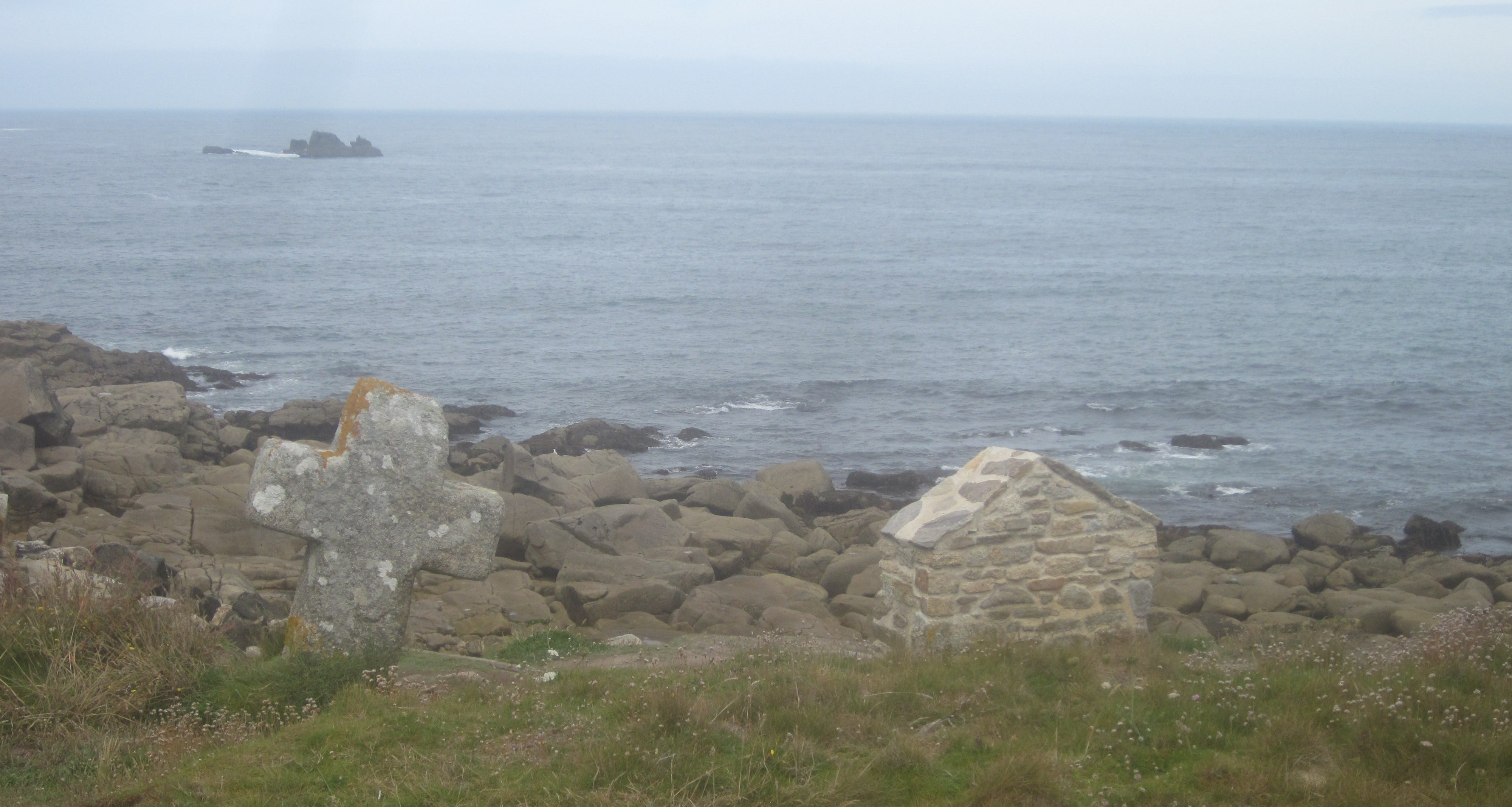
This site is a physical expression of the relationship of place and faith, but it has a long pre-Christian pedigree, once marked by a menhir, a standing-stone 2m high, which suggests the possible motive for Christianization, an assertion of the new religion on the site of the old. Local tradition says that rubbing against the menhir was a cure for rheumatism, but why was the stone placed here originally? There is no shortage of spectacular coastline in north-west Finistere, but this spot is special. Perhaps the sacred association is simply water.
This is surely a place to celebrate the miracle of water, but water as the basic life-giving force, not the fancy stuff of healing. Not water tamed and framed by a stone wall built by man, but the crux of survival. Giving humble thanks for a simple source is a positive kind of religious fundamentalism. Before one can be grateful for any quality of life, life itself has to be sustained, and water is the essential.
One spring on this site is capped by the fontaine and led from there by a stone channel to filter down towards the sea, greening as it goes. The other is close by, passing under the coast path, dribbling past clumps of yellow fleabane in a reedy line, aiming for the salt water below. Sweet sources representing the basis of existence trickle down the low cliff to merge with ocean. They deserve the focus of honour in this place, balancing in their invigorating gift the destructive power of ocean which will ultimately prevail over a disintegrating coastline.
The low coast here is topped by unfertile landes, maritime heath of coarse grass and plants whose roots bind the sandy soil. Wind and water dominate the scene, the south-west breeze bringing in the scent of the wider sea like an unwrapped present for shore-dwellers. It links here to the faraway and opens pathways to the unknown; just as establishing ritual in a place like this reaches out to infinity.
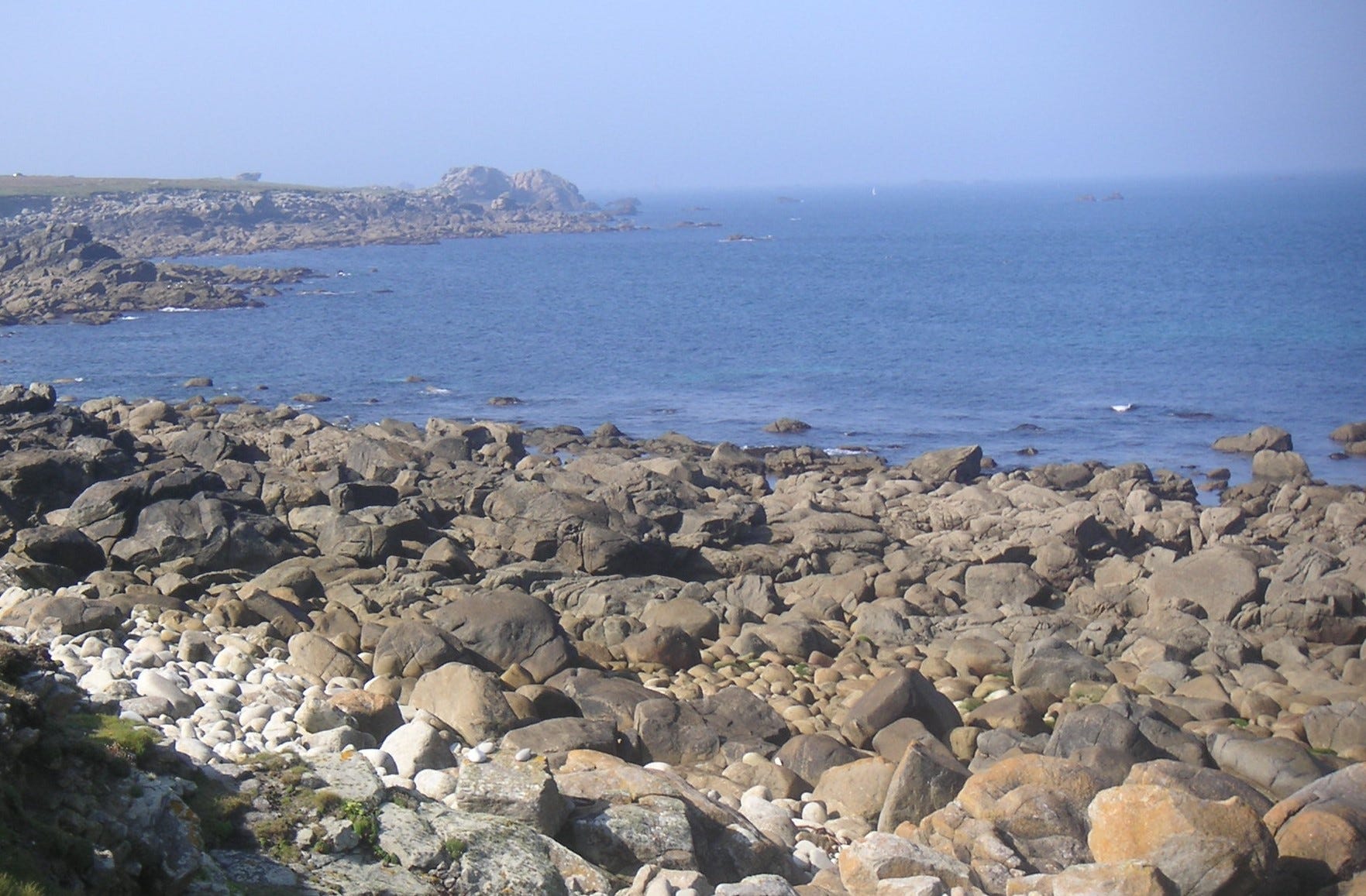
Here faith and hope of one sort or another have a long history: an original impulse of connection in the Neolithic with the placing of at least one standing-stone, a Bronze Age stone, a chapel, renewed over time and the crosses, X marks the spot of faith. There’s connection with the boundlessness inherent in belief. It is not the epitome of ‘peace and tranquillity’ strangely claimed in tourist-speak and belied by the crash of incoming waves, but a place that stirs the spirit and our subconscious seas.
The limitless quality of ocean reflects the relationship between place and faith, the shortness of the step between land and sea, now and eternity. The barrier of rocky armour hugging the shore is a frontier point between life and a last journey, big issues in a small setting, and the clinging humility of faith the most honest response in this most patulous of places.
This is an extract from my book Spirit of Place in Finistere
Thank you for reading. Please click LIKE if you do.
Such a beautiful excerpt - I love the line from place to water to a view of sacredness that is material, daily, and all the more connected to transcendence for that -- the reaching beyond ourselves that the earth and water give us.