
Blé noir
A humble plant for eating and drinking

The thin, acidic soil of central Brittany is not conducive to a plentiful supply of varied food. Away from the coastal areas and vegetable-producing Golden Belt of the north with its seaweed enriched earth, it accounts for the abject poverty in many areas, especially in the 19th century as progress rocked the towns whilst the rural population fell victim to epidemics and starvation when crops failed.
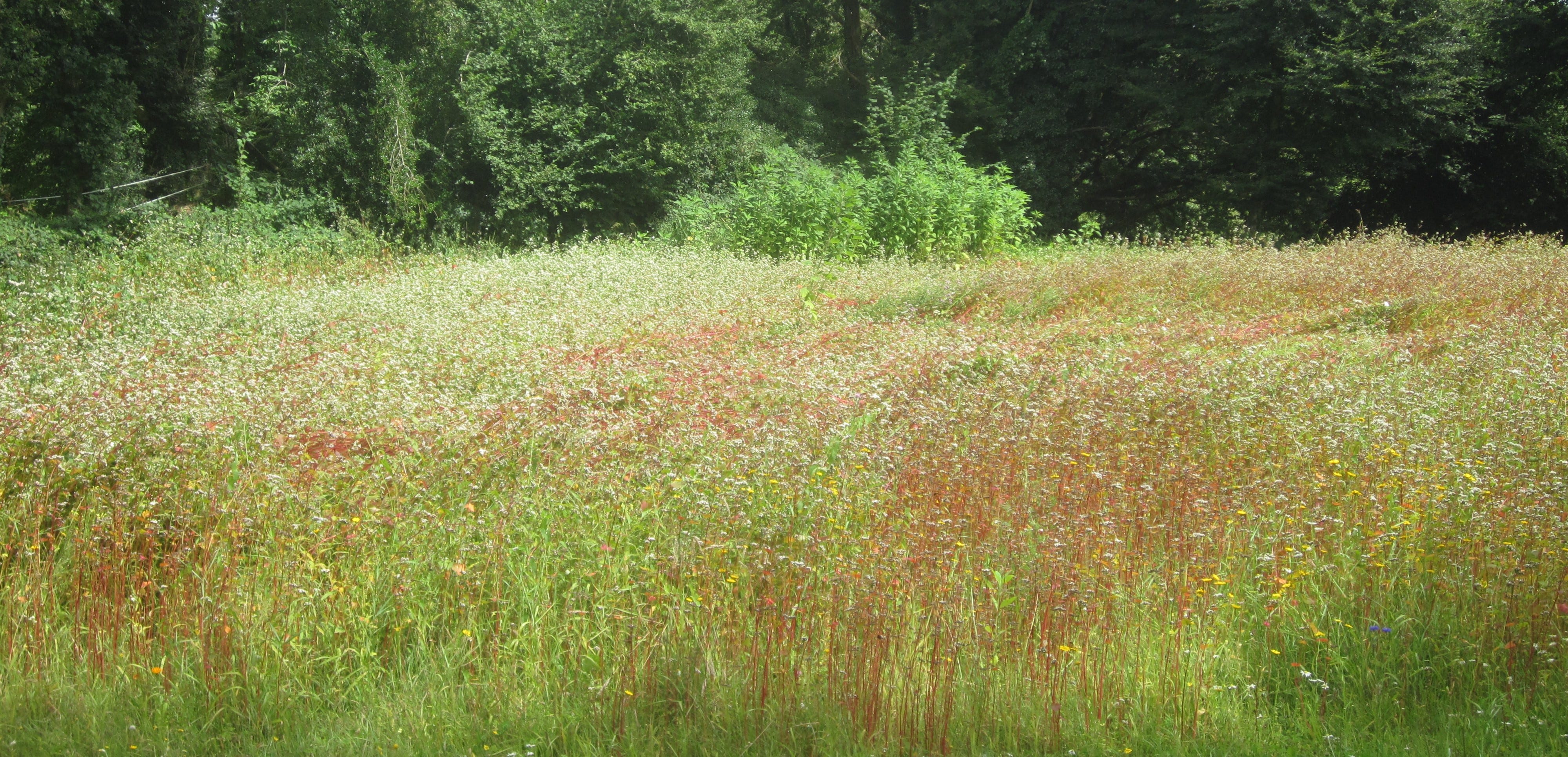
Traditional Breton cuisine is about simple ingredients offered by nature. Simplest of all is blé noir (black wheat, buckwheat, gwiniz du or ed du in Breton) and the eponymous dark flour it produces. The crop is usually grown in relatively small plots, a familiar colourful sight in the Monts d’Arrée. The flower is white or very pale pink as it flourishes on green stems, then turns grey as the stems redden towards the moment of harvest.
But Brittany is never simple for long. This is not a grain at all but a member of the polygonaceae family of plants, related to sorrel and rhubarb. The botanical name Fagopyrum is from the shape of the seed, like beech mast (fagus being the Latin for beech tree). Blé noir is also called ‘sarrasin’ from its supposed origins in the east (linked in some stories with the return of Crusaders), but pollen from this plant dating from the Iron Age has been found in marshes in Brittany by archaeologists. It appears that the use of buckwheat died out here in the 4th century CE and these plants were re-introduced in the 10-12th century. There is no word for it given in the Catholicon of 1499, the first Latin/French/Breton lexicon, but it was certainly widely grown in the 16th century.
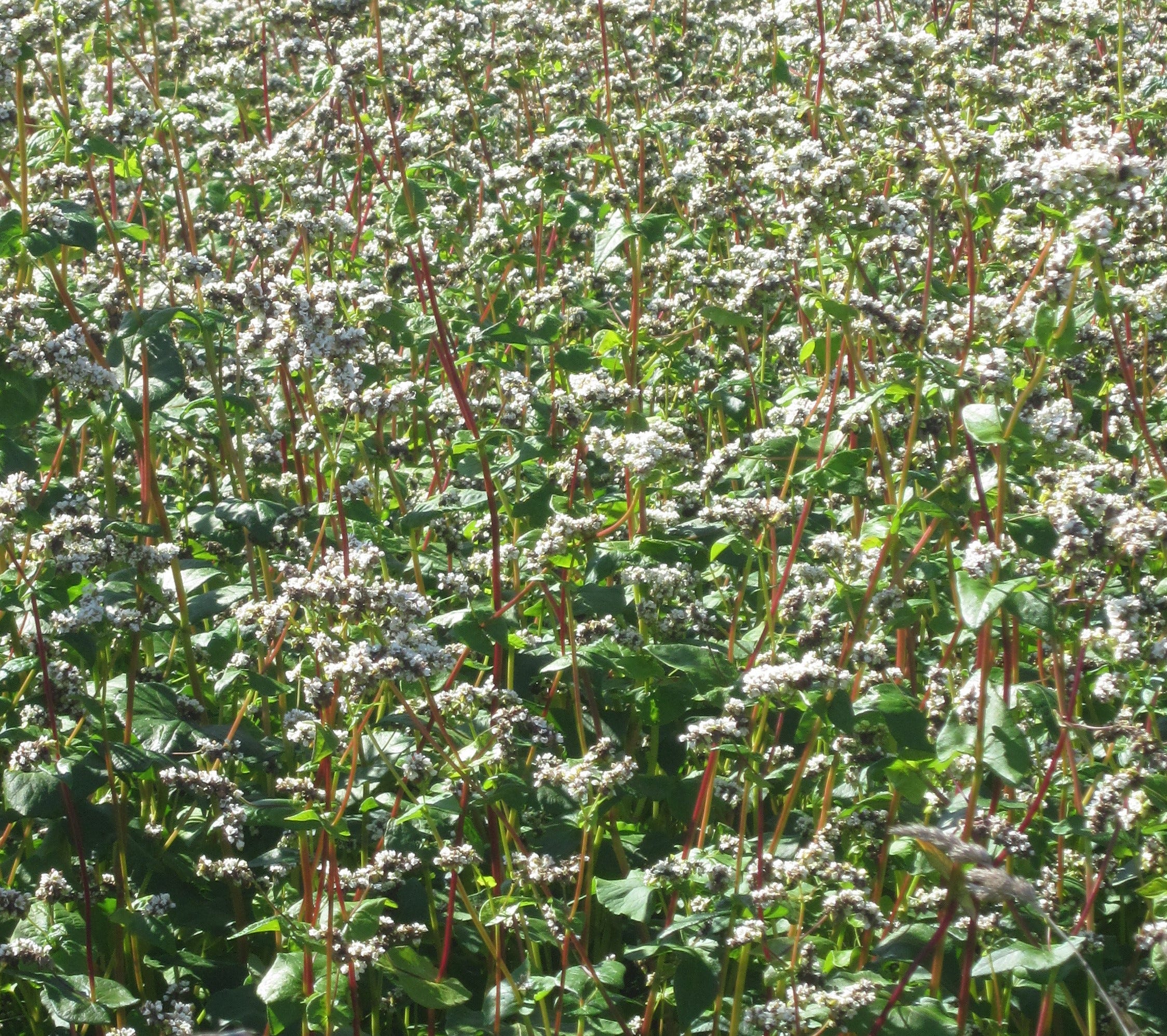
In reality blé noir is admirably suited to growth in poor earth, being hardy, resistant to disease and even fertilising the soil in which it is sown. The speedy growth – a hundred days from seed to harvest, as the popular saying goes - proved the value of this crop in the subsistence diet of peasants. It was filling, nutritious – incidentally, gluten-free - and could be ground into flour in the home rather than at the mill, making this a most economical commodity. The discarded ‘straw’ was used as bedding for animals or fertiliser.
This vital plant figures in folklore. Conteur Ernest du Laurens de la Barre (1819-1881) tells a story of birds, trees and flowers trying to protect themselves from a savage storm, horrified that the blé noir plants insisted on standing proud to face the hail and thunder. Afterwards, its stems were bent and so remain, in lasting punishment for their hubris.
In its most basic state, blé noir flour mixed with water and salt provided a thin gruel, or bouillie, the staple food in very poor households. The people of Huelgoat were said to have offered this unappetising dish to the giant Gargantua, who didn’t forget the insult. When he was given creamy oat porridge in Plouarzel, he obligingly tore up all the huge rocks from the inhabitants’ land and chucked them back at Huelgoat – the legendary origin of the famous granite Chaos there today.
Noel du Fail, writing in Rennes in the 16th century, says of blé noir: ‘In truth, without this grain (sic) ...poor people would have suffered greatly.’ Nearly three hundred years later, British traveller Adolphus Trollope describes the resources of a solitary farmhouse in the Méne hills: ‘their only food was a small quantity of black bread made of sarazin, eked out with potatoes, and buttermilk from the churn, whose produce they could not afford to eat’ (in line with the peasant policy of ‘sell the best and eat the rest’). He adds that many do not even get the dark bread, but only pancakes made with gruel in a hot frying-pan, shuddering at the memory of their leathery consistency.
The crêpe was a step up the culinary scale, but still a domestic dish. Peasants would have been astonished that today it is a ubiquitous symbol of Breton cuisine, and a feature of dining out. At one time crêpes served with anything other than just butter were referred to as krampouez bourc’hizien (bourgeois). It was a custom even in the 1960s to arrive at the crêperie with your own plate and pats of butter according to the number of pancakes you wanted to eat. The crêpe remains at its best when closest to its roots and served with accompaniments that would have been produced by the household’s land – butter, eggs, ham, mushrooms, apples and pears.
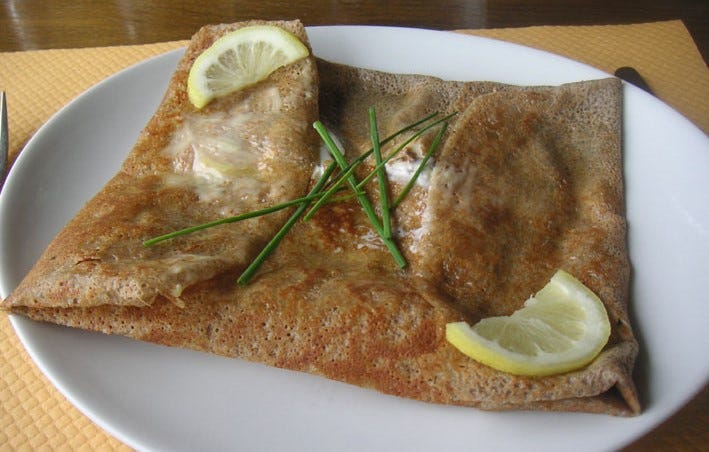
It is a fallacy to call savoury pancakes galettes and sweet ones – made with white wheat flour or froment - crêpes. Crêpes are historically both sweet and savoury in Breton-speaking territory, where the French word is nearest to the Breton krampouez. The French term galettes for the savoury version comes from parts of eastern Brittany where Breton was not spoken, although it is true that today the boundaries of usage are blurred. Haute-Bretagne has also given us another version, a sausage rolled in a crêpe. It’s a favourite pre or post-match snack for football fans in Rennes at the Stade Rennais: a popular chant from the terraces starts ‘galette saucisse je t’aime….’
The humble crêpe has come a long way from the cottage hearth. Exported to Paris and other parts of France by Breton emigrants, it also made the jump from filler to main course in the 1950s, from the home to the public arena in crêperies all over Brittany, and much further afield. Families often sent home-made crêpes to relatives abroad (although the US customs might confiscate them) or to students in university towns like Rennes. Although it may seem incongruous (and a creation for tourists in search of Breton experience since the 19th century) to go out and pay for simple peasant food much more appropriate in a family setting, it does seem the practice is older than many think. Documents listing assets at death include references to ‘galetteries’ in 18th century Rennes.
I had my one and only crêpe-making lesson from a master, Yannick Colas, then a retired chef and gifted advocate of all things Breton, now sadly deceased. My initial attempt at his house was predictably disastrous, an event so regular as to have a name: the first one is the crêpe du chien. In this case it was literally so, being gobbled up by my eager pup. I wish I could say after that it got easier, but I struggled with the wrist dexterity and lightness of application of the rozell to spread a lacy sheet of batter over the hot surface of the billig.
It became easier to let Yannick cook, and concentrate on eating. The next crêpe was, as tradition demands, plain with butter only, an intense flavour of blé noir, followed by more filled with ham, eggs and sausage before the homemade preserves were brought out ready for a sweet session. I gave up at this point, a greater disappointment to him than my inability to master the technique.
The skills of production can be seen at any festival anywhere in Brittany, but en masse at the Fête de la Crêpe at the Château of Tronjoly in Gourin, the effect is mesmerising. Behind a great line of electric plates, women and a few men effortlessly roll out crêpes in their hundreds to feed to crowds watching the production line in admiration.
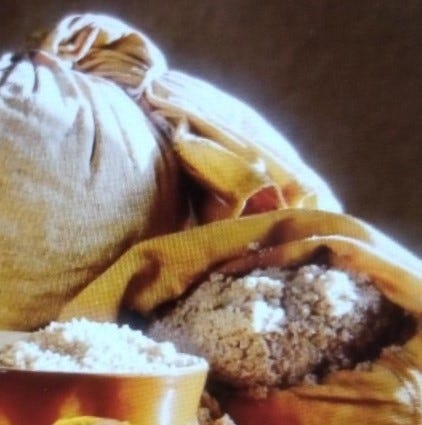
Farz is the generic name for flour-based dishes, and blé noir figures in another Breton classic, kig ha farz or meat and stuffing. This is the traditional dish of Léon, the north-west region of Finistère, famed for its vegetable production. It comprises meat – pork knuckle and bacon originally, later with beef and sausage added - cabbage and other vegetables like turnips or carrots. The farz, a compote of blé noir mixed with cream and butter, is cooked in a cloth bag, a reminder of Léon’s lucrative linen trade with England, alongside the other ingredients. Everything is simmered together for hours, making a dish that could be left to cook while work continued in the fields. Kig ha farz is regarded as something of a treat and features regularly on local menus today, often once a week, which is about the time it’ll take before you are hungry again.
Blé noir has recently taken on a new character in contemporary brewing, a growth industry in Brittany, first revived in 1985 by Breton partners under the guidance of English brewer Peter Austin. Coreff Brasserie was set up in Morlaix but later moved to Carhaix. One dark beer from organic blé noir is called Aour Du (black gold) or Gwiniz Du. And Brittany now even has its own whisky, made in Plomelin by the Distillerie des Menhirs – the name Eddu gives away its origin.
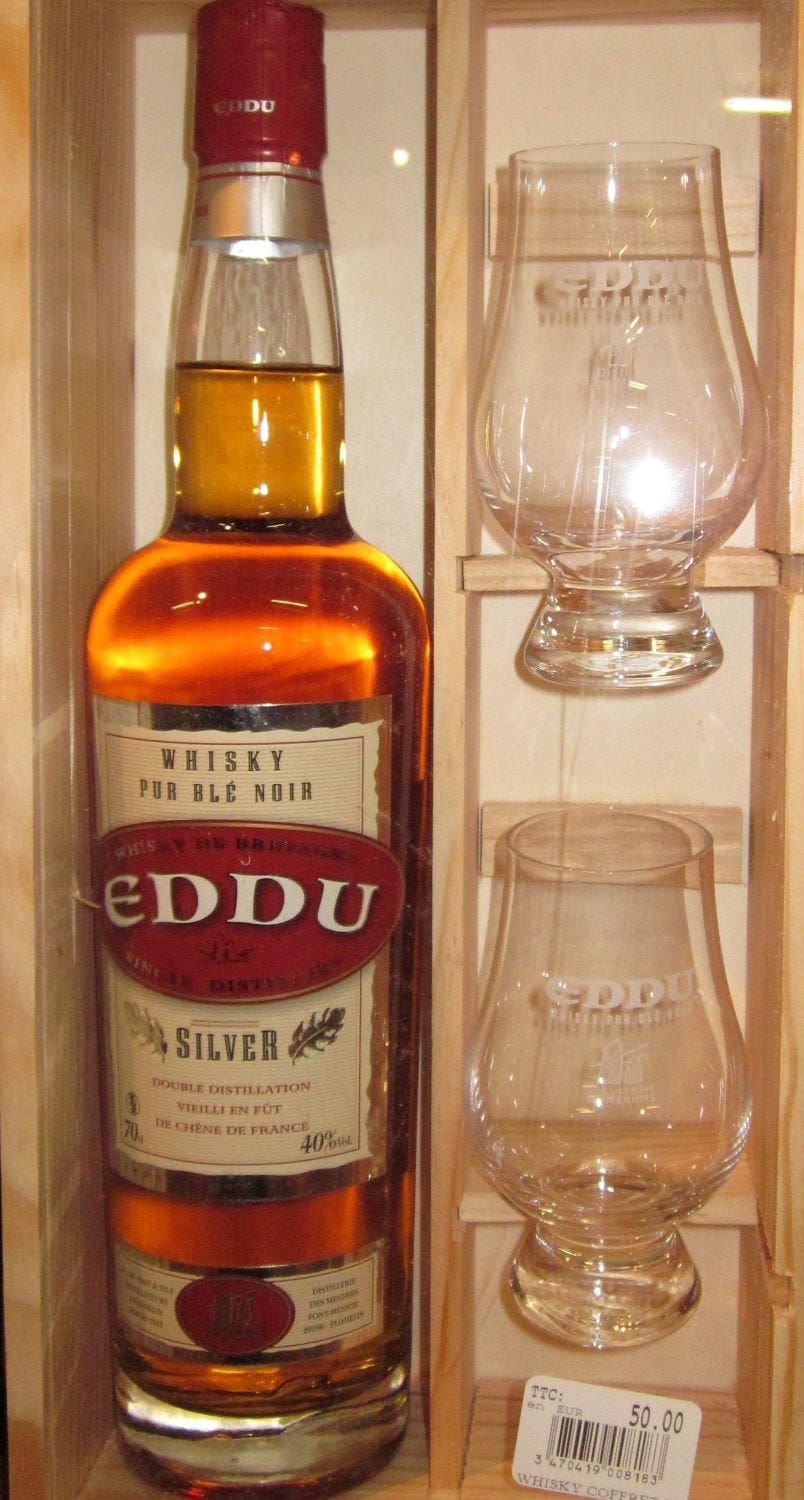
After years of neglect during the expansionism of agricultural production, blé noir today is regaining its place, becoming something of a symbol of Breton-ness. An excellent bakery near me adventurously makes croissants and pain au chocolat using this flour. Faithful performance of this humble plant in an important supporting role in the social history of Brittany has proved its worth and adaptability in the past, and there is plenty of scope for diversification in the future.
So interesting!
Lovely post, love buckwheat. Was the term 'sarrasin' used very much before recent times? I got the impression it was something of a re-branding, 'blé noir' being perceived a bit negatively.
I finally got around to ordering a kig ha farz sack of a sensible size, and we had one, made with sarrasin flour milled at the restored tide mill on the Rance estuary, with a vegetable stew, since we're not so keen on all the traditional porky elements. It was nice, but even with reduced quantities, we were eating leftovers for a week! I kept it solid and didn't crumble it, the cold slices worked quite well in the toaster.
There are a few nice old b/w documentary films on YT featuring kig ha farz, and David Lebovitz in Paris seems to have created some rare English language content about it, detailing his researches into and experiments making it. He remarks how stubbornly local it remains as a dish, with very few people having heard of it even within other parts of Brittany.
I've not tried the whisky, I wonder what that's like? Something for Christmas...