
Baie des Trépassés
The last rendezvous...

Time has been stretched to the limit in the last two weeks with my new little book Chateaubriand, Castle, Cat (about the Chateau of Combourg) coming up to print deadline, but I hope you will enjoy this short article continuing recent themes here, exploring the stirring western reaches of Finistère.
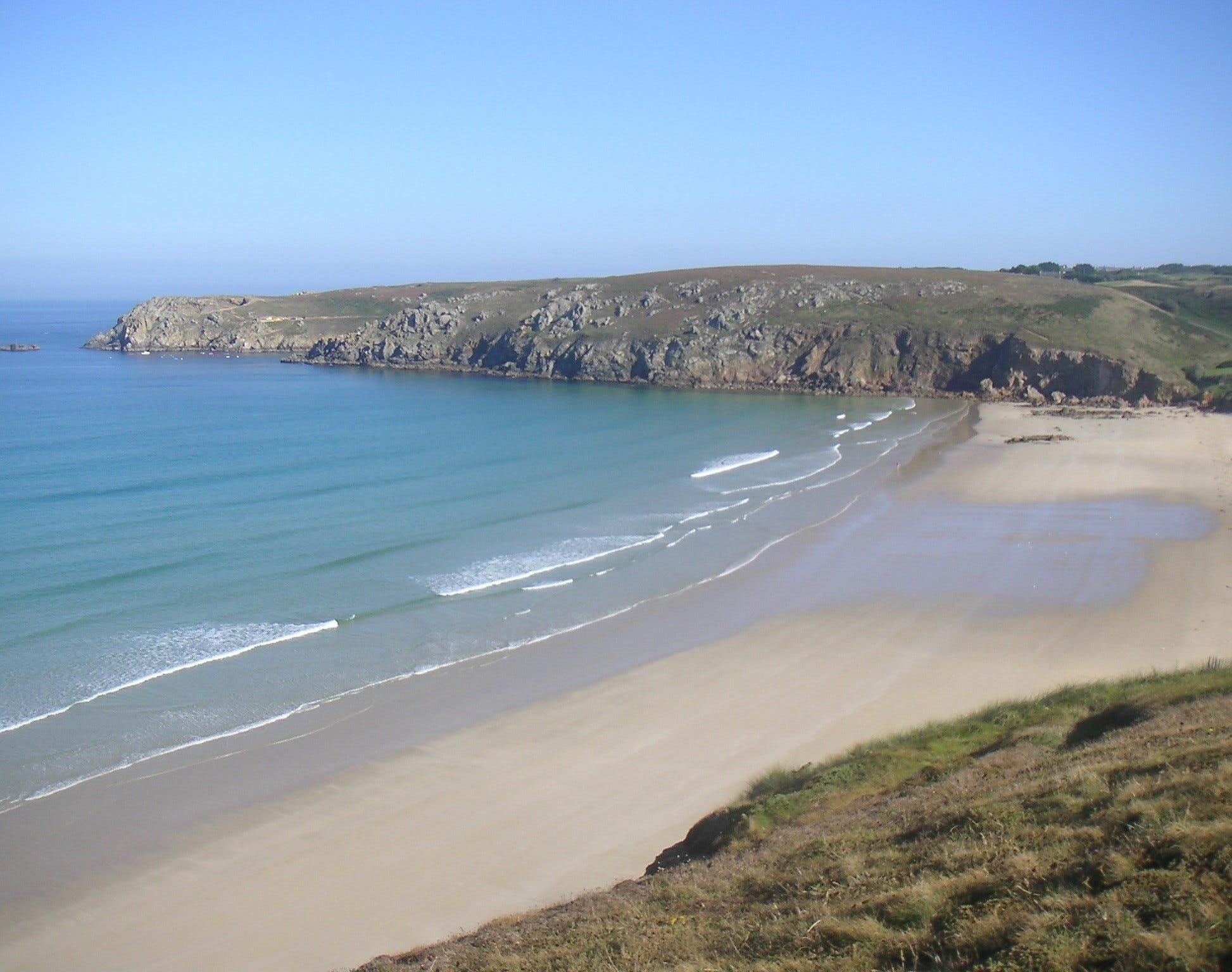
The Bay of Douarnenez, the Ile de Sein and the Pointe du Raz form an otherworldly triangle of dramatic land and seascapes, which has given rise to the most powerful of Breton legends. Yet another ingredient of the potion is the Baie des Trépasses or Bay of the Dead. This eerie stretch of pale sand and wild sea sits between the two forbidding arms of the Pointe du Raz and the Pointe du Van. It feels like the end of the earth, a jumping off point for the Ile de Sein, that final small plate of land before Atlantic infinity.
It is a scene that has inspired many writers. An early account by Jacques Cambry (a travelogue of Finistère in 1794) presents an excited observation of the bay’s writhing waters as a sea-monster swallowing and engulfing vast numbers of hapless sailors on an almost daily basis. Despite the obvious exaggeration, this certainly reflects the general impression of a dangerous place where man could not easily escape the merciless elements.
Guy de Maupassant visited the area in 1879 when walking part of the west coast of Brittany. He describes the ‘unforgettable melancholy and disturbing sadness’ of the bay, an aura which soon prompts the desire to get right away from such depressive moodiness. He says the frightening beach seems like the anteroom of a hellish sojourn. When he was there, the body of a sailor from Douarnenez, one of four lost at sea the week before, had just been found: ‘first come to the last rendezvous’...
The name in Breton, Bae an Anaon or Bay of Lost Souls, is a reference to the tradition that bodies of those lost at sea around the Raz de Sein would, thanks to the specific currents of the coastline here, eventually be washed up on this shore. (Other less evocative interpretations of the name are proposed.) There’s a proverb Etre enez hag er beg / eman berred ar goazed (between the island and the point, lies the cemetery of men) which draws attention to the perils of seafaring in these tempestuous waters.
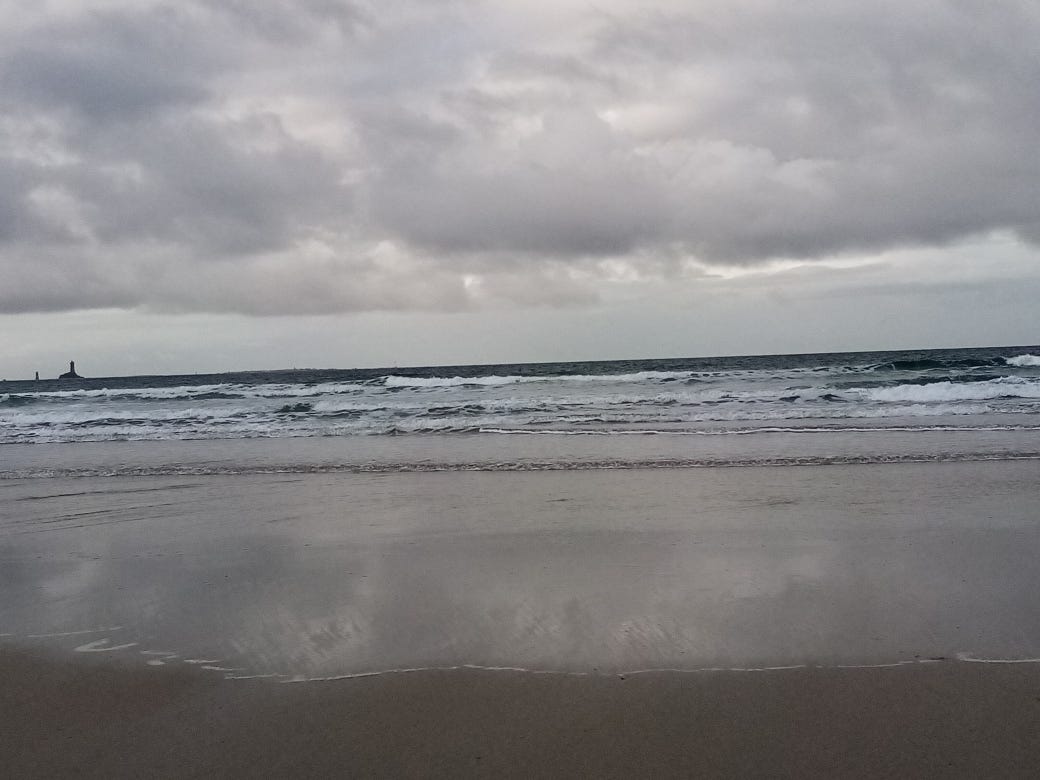
It is true that the Baie des Trépassés is electrifying when the wind is up and waves rage in, raising a thunderous echo between those stark walls of stone. A thousand grey nuances mix and merge, separate and clash behind the white horses of water pounding the shore. Noise and force are overwhelming. Surfers love the thrill of the ride in such a setting, but it retains the atmospheric pulse of a place of tragedy. No wonder the hideous huge statue on the Pointe du Raz above presents the Virgin Mary known as Our Lady of the Shipwrecked.
In the waters between this landfall and the Ile de Sein many sailors have seen a mysterious boat, its black silhouette moving instantly away to the horizon if approached. Anatole Le Braz in La Légende de la Mort (1893) describes how one who did manage to get near called out to the single figure aboard to see if help was needed, but with a flick of the steering oar the boat shot away into the distance.
This is the bag-noz or night boat, said to ferry the souls of those drowned at sea, piloted by the most recently departed or Ankou the Grim Reaper himself. One night a woman on the Ile de Sein, working in a group of seaweed gatherers, saw the night boat off-shore and recognised her husband, who had disappeared at sea, on board. She could only call out his name over and over again as the vessel passed silently on its way.
Sometimes the cries of the dead are heard from the boat, as they beseech a mass and symbolic burial that will allow them to pass to a place of rest. Otherwise they are doomed to this eternal errance tossed on the tides. Their constant sighs and lamentations are carried on the wind on stormy nights in the bay. Tristan Corbière, the acerbic Morlaisien poet, writes that here where the very place-names have voices, the bones of the drowned return from the depths of the bay to knock on cabin doors begging a shroud for proper interment.
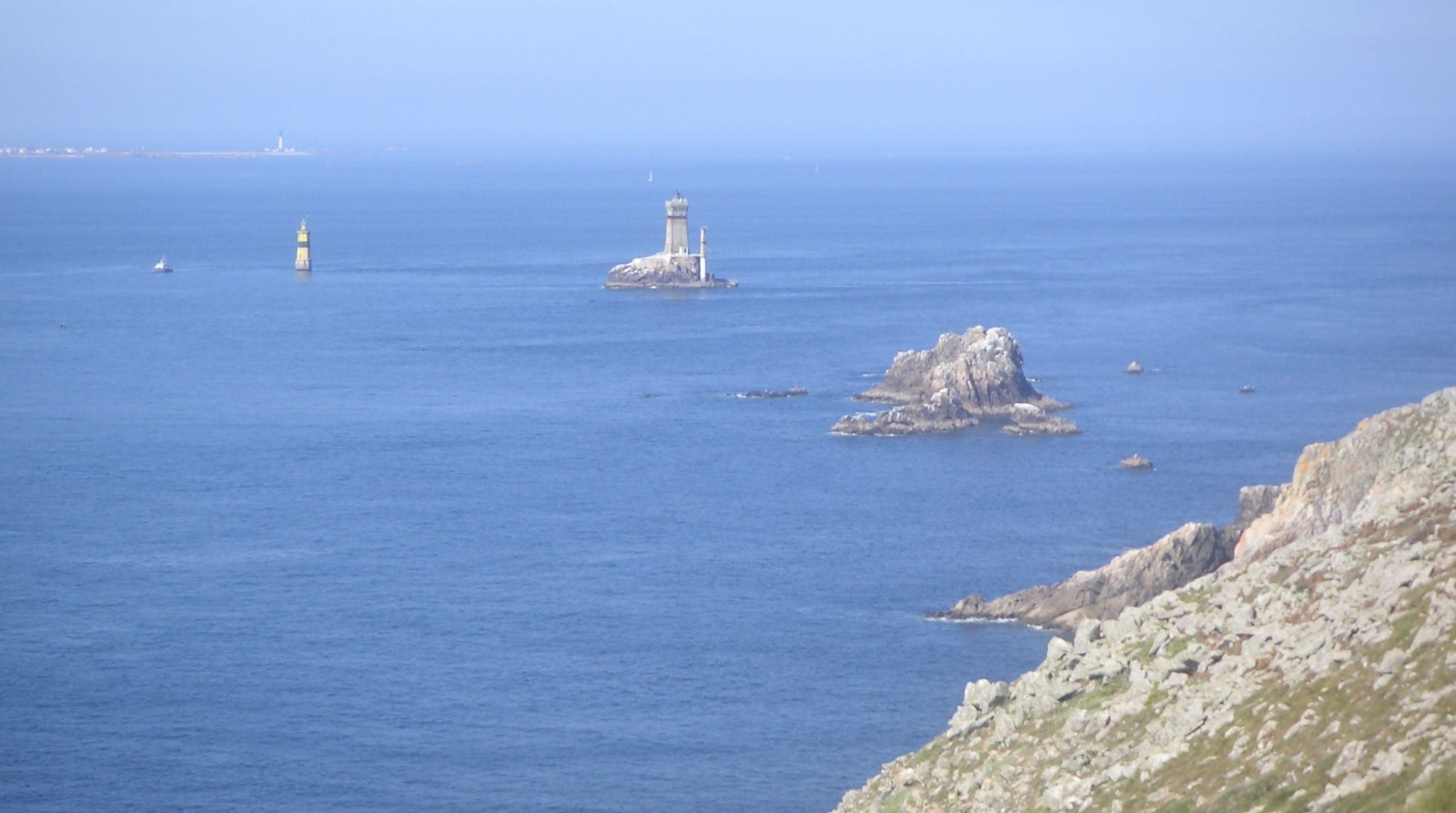
Above the bay, the Pointe du Raz itself is a craggy granite arm reaching out towards the Ile de Sein, its orphaned child, which once shared the same identity before post-glacial rising of sea-levels created the raz that now separates them. The Phare de la Vieille and the Phare du Tévennec (on a rock once said to be maritime Ankou’s base for operating the night-boat) watch over these turbulent waters, whose unpredictable and pernicious character has given rise to so many dreadful tales. And both those light-houses have shocking stories of their own to tell on similar themes of a ruthless sea, death and lost souls… another time perhaps.
Thank you for reading. Please click that Like button, if you do.
Thanks Wendy, another great piece. I cycled there from Douarnenez a few years ago and was glad to return home. You capture the atmosphere so well - I wish I had read this before I went!
It's a truly memorable and haunting place. I agree the statue is hideous, yet I found even that had a moving impact when I first saw it, imbued as it is with the atmosphere of the place; the revulsion it also inspires is almost a part of it. I've a rather poorly exposed photo by my bed of Tom and Molly sitting on the rocks there about 20 years ago; Molly got very wild and excited and when Tom went further on out of sight she was furious and barked till he got back!